Design for manufacturability (DFM) means shaping a part around how it will actually be cut, bent and assembled. On a sheet metal part, that early review usually trims piece price more than any late change to material or finish.
That review is part of the design for manufacturability work done by our Grand Rapids, MI sheet metal fabricator engineers.
Here's where DFM saves money on a sheet metal part.
Why Cost Is Set at the Design Stage
Boothroyd Dewhurst, the firm behind the DFMA method, says over 70% of product cost is . By the time a print reaches the shop floor, most of the price is already decided.
A DFM review moves manufacturing questions to the point where a change takes minutes in CAD. Building a sheet metal prototype then confirms those changes before production volumes.
Start With the Flat Pattern
Every sheet metal part begins as a flat blank cut from stock, then gets formed. The DeWys sheet metal design guide puts it plainly: if the flat pattern doesn't make sense, the part won't either.
Deep contours and compound curves are hard to unfold, so they add cost fast.
Design the Bends First
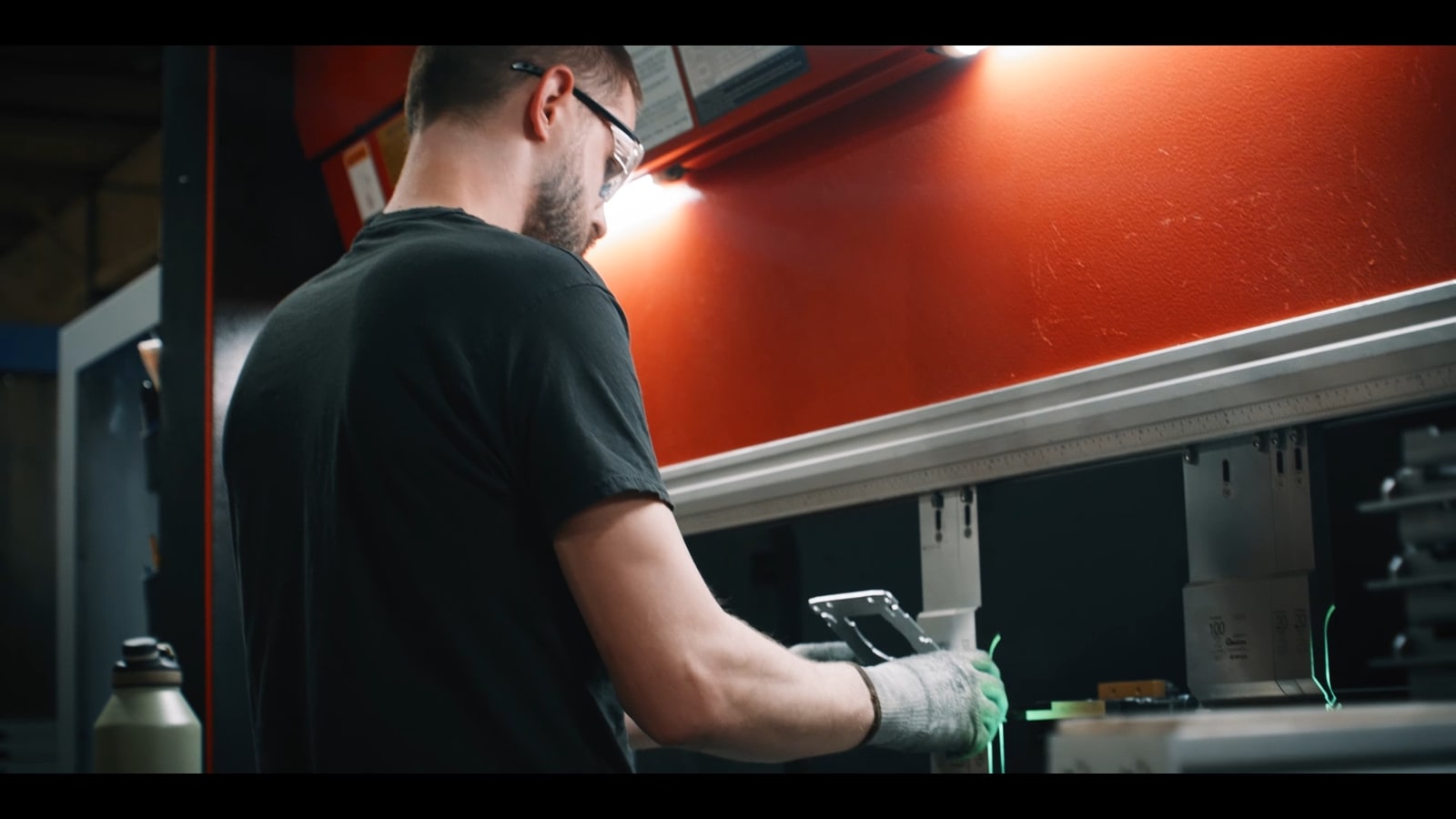
Most sheet metal problems show up at the bend. Material stretches and , and CAD software accounts for that stretch with a value called the K-factor.
A few habits keep bending affordable:
- Keep the inside bend radius at least equal to material thickness to prevent cracking
- Use one radius throughout so the press brake needs fewer tool changes
- Point bends in the same direction where you can
- Avoid tight bends on thick material
Our forming and bending services team can confirm what each machine holds. Picking a machine is its own cost call, covered in panel bender vs. press brake.
Give Holes and Cuts Room
Holes, slots and notches placed too close to a bend or edge can distort during forming. Relief cuts at bend corners and rounded internal corners reduce tearing.
Very small or intricate features may not cut cleanly.
Stick With Standard Materials and Gauges
Standard sheet sizes and gauges cost less and arrive faster than special-order stock. They also nest more efficiently on the sheet, which lowers scrap.
Stainless grades 304, 316 and 430, 5052 and 3003 aluminum, and cold or hot rolled steel are all common stock for precision sheet metal fabrication at DeWys. Choosing one early keeps quotes and lead times predictable.
Tie Tolerances to Function
Overly tight tolerances add setup and inspection time without making the part work better. Features cut on one flat face hold close tolerances, while dimensions that cross several bends need more room.
Reserve tight callouts for features that mate, locate or seal. Our guide to sheet metal tolerances covers what belongs on the drawing.
Plan for Hardware, Welding and Finish
A fabricated part is rarely the final product. Inserts, fasteners and welds all need tool access and space that should be planned before the print is released.
Coatings add thickness, so powder coating can affect fit on tight features. A DXF for flat parts and a STEP model for context also speed quoting across our metal fabrication services.
Frequently Asked Questions
What is the difference between DFM and DFA?
DFM focuses on making each individual part easier and cheaper to produce, while DFA focuses on reducing the number of parts and speeding up assembly. Most programs use both, often under the combined name DFMA.
Boothroyd Dewhurst describes DFA as cutting part count and making the remaining parts easier to put together. On a sheet metal assembly, that can mean combining two brackets into one formed part.
Can DFM lower the cost of a part already in production?
Yes, an existing part can often be redesigned for cost reduction, and DeWys lists both design improvement and cost-reduction redesign among its product development services. Typical changes include one bend radius, a stock gauge or looser noncritical tolerances.
Any change goes out as a new revision. Each revision is tracked under the company's ISO-approved document control, so the floor always builds to the latest print.
Is DFM worth it for prototypes and small orders?
Yes, and a prototype is often the best time for it, because changes are cheap before production programs are set. DeWys sets no minimum order and regularly offers DFM feedback during prototyping.
Quotes can include tiered quantities and pricing. That shows how a design change and a higher volume each affect the piece price.
Does powder coating change how a sheet metal part should be designed?
Yes, because powder coat adds thickness that can affect tight holes, slots and mating features. Designers should allow for the coating on any feature that controls fit, or call for masking.
DeWys runs an in-house powder coating line, so finish and fabrication can be reviewed together. Masking requirements belong on the RFQ, since a missing finish spec is a common reason quotes stall.
What is a K-factor in sheet metal design?
A K-factor is the ratio that locates the neutral axis of a bend relative to material thickness. CAD software uses it to calculate flat pattern length, so a wrong value produces flanges that come out too long or too short.
Wikipedia's entry on notes that K-factor typically falls between 0.3 and 0.5. Ask your fabricator which value matches their tooling.
Talk to DeWys Metal Solutions About DFM
Design for manufacturability before you release a print can lower sheet metal part costs for the life of a program. Send your drawings to the Grand Rapids, MI sheet metal fabricator team at DeWys for a DFM review.
Call DeWys Metal Solutions today at (616) 677-5281 or request a quote online.